
About
MileBot Robotics is a medical rehabilitation robotics company founded by two PhDs who studied overseas. The company focuses on building an intelligent rehabilitation system and improving the efficiency and effectiveness of rehabilitation therapy through technologies such as robotics, the internet of things, and big data. Based on its core technology, the robotic interaction technology with compliant actuators,the company has developed several medical rehabilitation robots, including lower limb exoskeleton rehabilitation robots and walking aid device. http://mile-bot.com/
Home
MileBot robotic rehabilitation devices is a kind of wearable robots that help patients to do exercises under predefined programs. It is designed for the lower limb rehabilitation of patients after getting stroke,spinal cord injury or brain injury,we provide different types of rehabilitation robots for adult and child.
Contact
- E-mail
AddressB502, Shenzhen National Engineering Laboratory Building, Nanshan District, Shenzhen, China
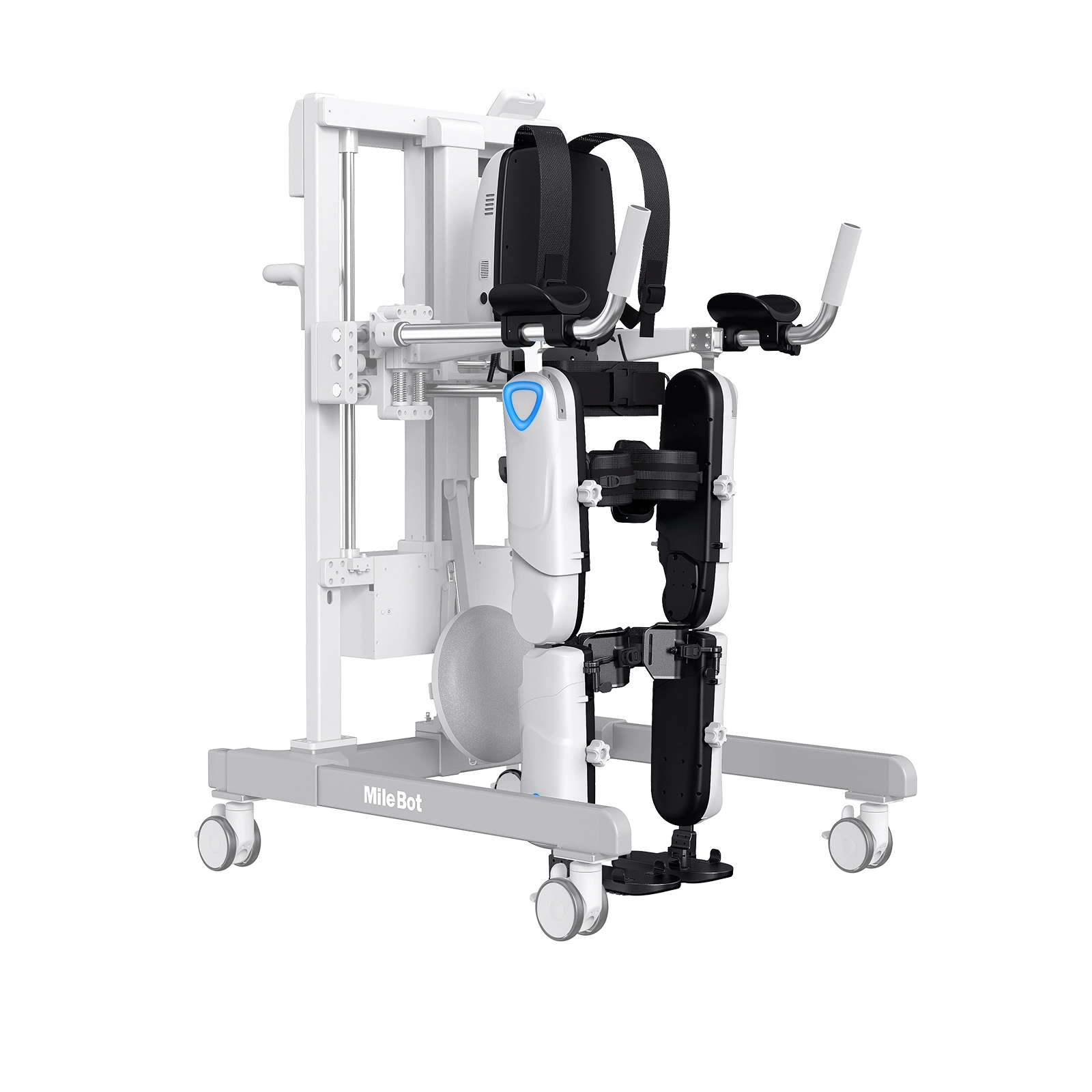 Advanced MS Exoskeleton: Precision Exoskeleton For MS Patients
Integrating cutting-edge robotics and adaptive support, our exoskeleton for ms empowers mobility, enhances gait stability, and supports rehabilitation in multiple sclerosis treatment.
MileBot Robotics specializes in various types of rehabilitation robots for Multiple Sclerosis. Our comprehensive product range includes the Lower Limb Rehabilitation Robot BEAR (H Series), BEAR (A Series), RELAX (C Series), and Gait Assist Systems MAX (M and F Series). These devices are designed to improve mobility and support neuroplasticity, offering tailored therapy to address the unique needs of each patient. Our technology ensures effective and efficient rehabilitation, enhancing the quality of life for those affected by Multiple Sclerosis.
Revolutionizing Rehabilitation: Robotic Exoskeletons for Multiple Sclerosis Patients
Introduction to Multiple Sclerosis (MS)
Multiple Sclerosis (MS) is a chronic autoimmune disease that affects the central nervous system, leading to a range of physical and cognitive impairments. Traditional rehabilitation methods often fall short in addressing the complex needs of MS patients, which is why innovative solutions such as the exoskeleton for ms patients are increasingly being explored to support mobility and enhance recovery outcomes.
What are Robotic Exoskeletons?
Robotic exoskeletons are wearable devices designed to support and enhance the user's natural movements. These devices are equipped with sensors, actuators, and advanced algorithms to assist in walking and other motor functions.
Future Prospects
The future of robotic exoskeletons in MS rehabilitation looks promising. Ongoing research and development in medical robotics are expected to yield even more advanced and accessible solutions, further revolutionizing the field of neurological rehabilitation, with options from Milebot making such technology increasingly attainable for patients and clinics.
The Role of Exoskeleton Robotics in Multiple Sclerosis Management
Multiple Sclerosis (MS) is a debilitating autoimmune disease that affects the central nervous system, leading to a wide range of symptoms including muscle weakness, coordination issues, and cognitive impairments. Effective management of MS requires a multifaceted approach, and exoskeleton for ms patients is emerging as a revolutionary tool in this field.
- How Exoskeleton Robotics Work
Exoskeleton robotics, also known as powered exoskeletons, are wearable devices that assist in movement. These devices are equipped with sensors, actuators, and advanced algorithms to detect the user’s intentions and provide the necessary support. They can be particularly beneficial for MS patients who struggle with mobility issues.
How Exoskeleton Help MS Patients
Multiple sclerosis (MS) often brings progressive challenges: muscle weakness, balance loss, fatigue, and reduced mobility. A stroke exoskeleton, or more precisely an exoskeleton for multiple sclerosis, offers powerful support in overcoming these barriers. Here’s how:
Regained mobility and gait improvement
Using an MS exoskeleton, patients can walk more naturally. The device supports hip and knee joints to enhance gait symmetry, speed, and endurance—even with limited strength. Studies show powered exoskeletons help MS users cover longer walking distances and improve walking speed.
Muscle strength & coordination boost
The exoskeleton’s mechanical support allows for repetitive training that targets weak muscles, reducing compensatory overuse and helping rebuild coordination. This kind of training can also counteract deconditioning often seen in MS.
Balance, posture & fall risk reduction
MS exoskeletons come with sensors and stability control that provide corrective support. This soft exosuit for sale helps patients maintain better posture, stability during walking, and fewer falls.
Psychological gains & independence
Being able to stand, move, or walk more independently has real impact: boosting confidence, lowering dependence on caregivers, and improving quality of life.
- Benefits for MS Patients
Improved Mobility: Powered exoskeleton robotics can significantly enhance mobility for MS patients. By supporting and augmenting natural movements, these devices can help patients walk more easily and with better coordination.
Muscle Strength and Endurance: Regular use of exoskeletons can improve muscle strength and endurance, which are often compromised in MS patients. This can lead to better overall physical health and reduced fatigue.
Psychological Benefits: The ability to move more freely and independently can have a profound psychological impact. Increased mobility can boost confidence, reduce feelings of helplessness, and improve overall quality of life.
- Challenges and Future Prospects
Accessibility and Cost: One of the main challenges is the high cost of walking assist exoskeleton robotics, which can limit accessibility for many patients. However, ongoing research and development are expected to make these devices more affordable and widely available.
Customization and Adaptability: Future advancements in medical robotics aim to create more customizable and adaptable exoskeletons that can meet the specific needs of individual MS patients. This will make the devices even more effective in managing the disease.
Exoskeleton robotics are playing an increasingly important role in the management of Multiple Sclerosis. From improving mobility and muscle strength to offering significant psychological benefits, these advanced devices are revolutionizing the way MS is treated. The growing availability of exoskeleton multiple sclerosis solutions highlights how targeted technologies can enhance rehabilitation outcomes for patients. As technology continues to evolve, the future looks promising for MS patients seeking more effective and accessible rehabilitation options.
 Lower Limb Rehabilitation Robot BEAR (H Series)
The BEAR H series of products are rehabilitation robots that feature both active training mode and passive training mode, making them stand out among different types of rehabilitation robots. They are designed to help adult patients with training and rehabilitation. The BEAR H series are applicable for patients with a height range of 155cm to 190cm.
Bear H series are our first generation of soft robotics rehabilitation and currently only available in Chinese market. For international customers, please check our upgraded product-BEAR A series.
Lower Limb Rehabilitation Robot BEAR (H Series) Features
1.Design with safe stand: the rehabilitation robot, including advanced spinal exoskeleton technology, is equipped with a stand which can support patients and protect them from falling.
- Comfortable trainning experience: the robot uses built-in compliant actuators to drive itself. It can produce flexible output to keep patients comfortable when they doing trainning.
- Multiple mode options: the exoskeleton for elderly people can provide serval trainning modes including intelligent mode, continuous walking mode, single-step walking model and Leg Swing trainning mode, it can meet patients' demand in different rehabilitative stage.
- Adjustable structure: the waist width and the length of thigh and calf are all adjustable. These adjustable parts keep patients safe and secure when they are trainning.
If you want to know more kinds of powered exoskeleton suit, please visit our website.
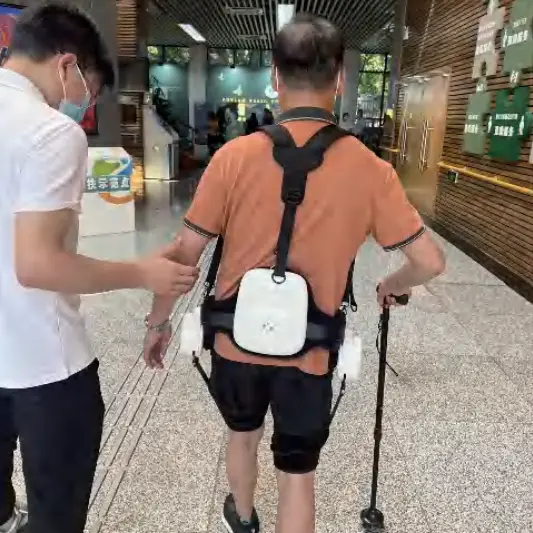 Gait Assit System MAX(M Series)
MAX M Series of products are lightweight exoskeletons designed to assist patients in walking with less effort. As one of the most innovative types of rehabilitation robots, they can connect with our mobile phone app through Bluetooth. The devices provide multiple modes, including assist mode, left hemiplegia mode, and right hemiplegia mode, catering to diverse user needs.
Gait Assit System MAX (M Series) Features
- Light-weight and compact design: the net weight of the robot is appromixately 3.2KG. It comes with a compact design in order to make sure users to wear it easily.
- Five levels of boost: the robot can provide total five levels of boost for users and the maxium boost is 12 N·m.
- Multiple mode options: the robot has serval working modes including assistance mode, left hemiplegia mode and right hemiplegia mode. It can meet users' demand in different situation.
- Adjustable structure: the bandages for back and leg are all adjustable, which keep patients comfortable and secure when they are using the machine.
For rehabilitation centers, healthcare providers, and distributors exploring additional wearable mobility solutions, view our soft exosuit for sale and other robotic exoskeleton suit for walking.
Application Case of Gait Assit System MAX (M Series)
Gait assist system are widely used in Singapore, Australia, Hong Kong, China (University of Hong Kong, Kowloon Hospital, Community Rehabilitation Center NGO, VTC, Hong Kong Anglican Nursing Home), and various provinces and cities in mainland China, supported by innovative solutions from a leading robotic rehabilitation devices company.
If you want to know more kinds of exoskeleton suit, please visit our website.